News · Burlington, Ontario
Published
Burlington’s October 2026 Earthquakes: What Happened and What the Records Mean
The recorded October 13–14, 2026 Burlington-area events had magnitudes 1.4 and 1.5, with locations approximately seven kilometres east of the city and depths of five kilometres. Local and UTC dates differ for the first event. Contemporary reporting said no damage reports had reached the federal analyst at that time.
Facts checked
In this story
Two small events, with precise times
A small earthquake can be an oddly uncertain experience. Was that a passing vehicle, a sudden noise or the building briefly expressing an opinion? Burlington’s October events have a clearer answer in the recorded data: two small earthquakes east of the city, separated by a few hours.
The first occurred at 10:42 p.m. EDT on October 13, 2026, with magnitude 1.4. The second was recorded at 1:13 a.m. EDT on October 14, with magnitude 1.5. The saved federal event records place both at a depth of five kilometres, approximately seven kilometres east of Burlington. Those details describe these events; they are not a prediction of the next one.
Source: Earthquakes Canada: October 13 local-time Burlington earthquake
Source: Earthquakes Canada: October 14 early-morning earthquake
Why the dates can appear to disagree
Earthquake records often use UTC, a common time reference that allows events in different countries to be compared. In Burlington’s local time, the first event was still on the evening of October 13. In UTC, it had already become October 14. A different date in a record heading can therefore refer to the same event rather than another earthquake.
Keep the time zone attached when comparing a report with something you remember feeling. The date, time, location and magnitude together are much more useful than a screenshot of one number. A local late-night experience and a federal early-morning timestamp can both be accurate.
Source: Earthquakes Canada: October 13 local-time Burlington earthquake
Source: Earthquakes Canada: October 14 early-morning earthquake
What the magnitude does, and does not, tell you
The two values describe small recorded events. They should not be inflated into evidence of widespread destruction, nor used to declare what every person must have felt. A measured event and an individual experience are different kinds of information. Someone may notice a brief sound or movement while another person nearby notices nothing.
Contemporary BurlingtonToday reporting quoted a federal seismologist saying no damage reports had been received at that point. That is an important limit on the account, not an inspection of every property. If a person has a specific concern about a building, an internet joke or a general description of a small earthquake cannot assess that concern.
Avoid assigning a cause to every noise heard that evening. The recorded events establish that earthquakes occurred; matching a particular household sound to one of them still depends on timing and circumstances. The useful approach is to compare the details rather than letting the most dramatic explanation win by default.
Source: BurlingtonToday: seismologist on the two small earthquakes
Source: Earthquakes Canada: October 13 local-time Burlington earthquake
Source: Earthquakes Canada: October 14 early-morning earthquake
A local response can include humour without changing the facts
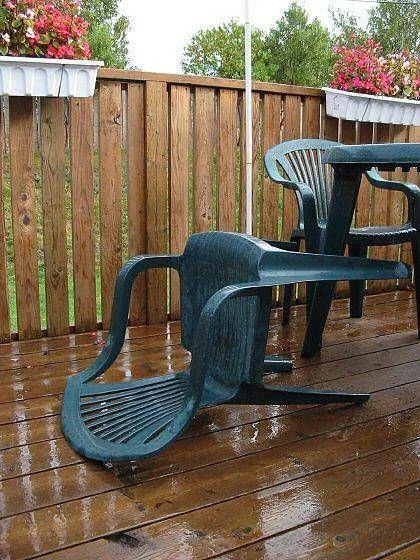
The local response included a comic fallen-chair image and gentle jokes about a very modest disaster. That sort of humour makes sense when people are processing an event that was small enough to leave many of them wondering whether they missed it altogether. A plastic chair is an efficient actor: it can look stricken without requiring a press conference.
The image is not verified evidence of earthquake damage. Keeping that distinction clear leaves room for the joke without turning it into a claim about the city. It also leaves room for someone who found the noise unsettling. People do not need identical reactions for the underlying record to remain the same.
Source: Residents respond with a fallen-chair joke, October 2026
Source: BurlingtonToday: seismologist on the two small earthquakes
Where to check a future report
Use Earthquakes Canada’s event information for a dated record and any linked reporting route for what people experienced. Include the time, location and a straightforward description rather than trying to supply a technical diagnosis. A useful account of a brief movement can help without becoming a claim about its cause or severity.
For this pair of events, the responsible conclusion is modest: two small earthquakes were recorded east of Burlington on the local evening and following morning, with no damage reports described in the contemporary analyst’s account. It is an interesting piece of local geology, and it can remain that size. The furniture does not need to be promoted into a witness.
Source: Earthquakes Canada: October 13 local-time Burlington earthquake
Source: Earthquakes Canada: October 14 early-morning earthquake
Source: BurlingtonToday: seismologist on the two small earthquakes
Source: Residents respond with a fallen-chair joke, October 2026
Questions people ask
Did Burlington have earthquakes in October 2026?
Yes. Earthquakes Canada records magnitude 1.4 and 1.5 events east of the city.
Source: Earthquakes Canada: October 13 local-time Burlington earthquake
When was the first event in local time?
October 13 at 10:42 p.m. EDT.
Source: Earthquakes Canada: October 13 local-time Burlington earthquake
When was the second event?
October 14 at 1:13 a.m. EDT.
Source: Earthquakes Canada: October 14 early-morning earthquake
Why does the first federal page say October 14?
Its heading uses UTC. The local time was still October 13.
Source: Earthquakes Canada: October 13 local-time Burlington earthquake
How deep were the recorded events?
Both federal records give a depth of five kilometres.
Source: Earthquakes Canada: October 13 local-time Burlington earthquake
Where were they located?
The federal descriptions place them approximately seven kilometres east of Burlington.
Source: Earthquakes Canada: October 14 early-morning earthquake
Was damage confirmed?
Contemporary reporting quoted the federal analyst saying no damage reports had been received at that time. This is not an inspection of every property.
Source: BurlingtonToday: seismologist on the two small earthquakes
Can I submit what I felt?
The federal event pages include links for community experience reports.
Source: Earthquakes Canada: October 14 early-morning earthquake
Do these two events predict another earthquake?
This article does not make a forecast. The dated records establish these events, not a prediction.
Source: Earthquakes Canada: October 13 local-time Burlington earthquake
Why might I see two dates for one earthquake?
Federal records may use UTC. The first event’s UTC date is October14 while its Burlington local date is October13.
Source: Earthquakes Canada: October 13 local-time Burlington earthquake
What information helps match a felt event to a record?
The date, time zone, location and a clear description of the experience help distinguish events.
Source: Earthquakes Canada: October 13 local-time Burlington earthquake
Something changed? Tell us about a correction.